TeleKORI: smartphones turned into AI-assisted remote vision-testing tools.
Digital health · Early stage · TRL 3 · Users: 20 adult patients and their clinicians
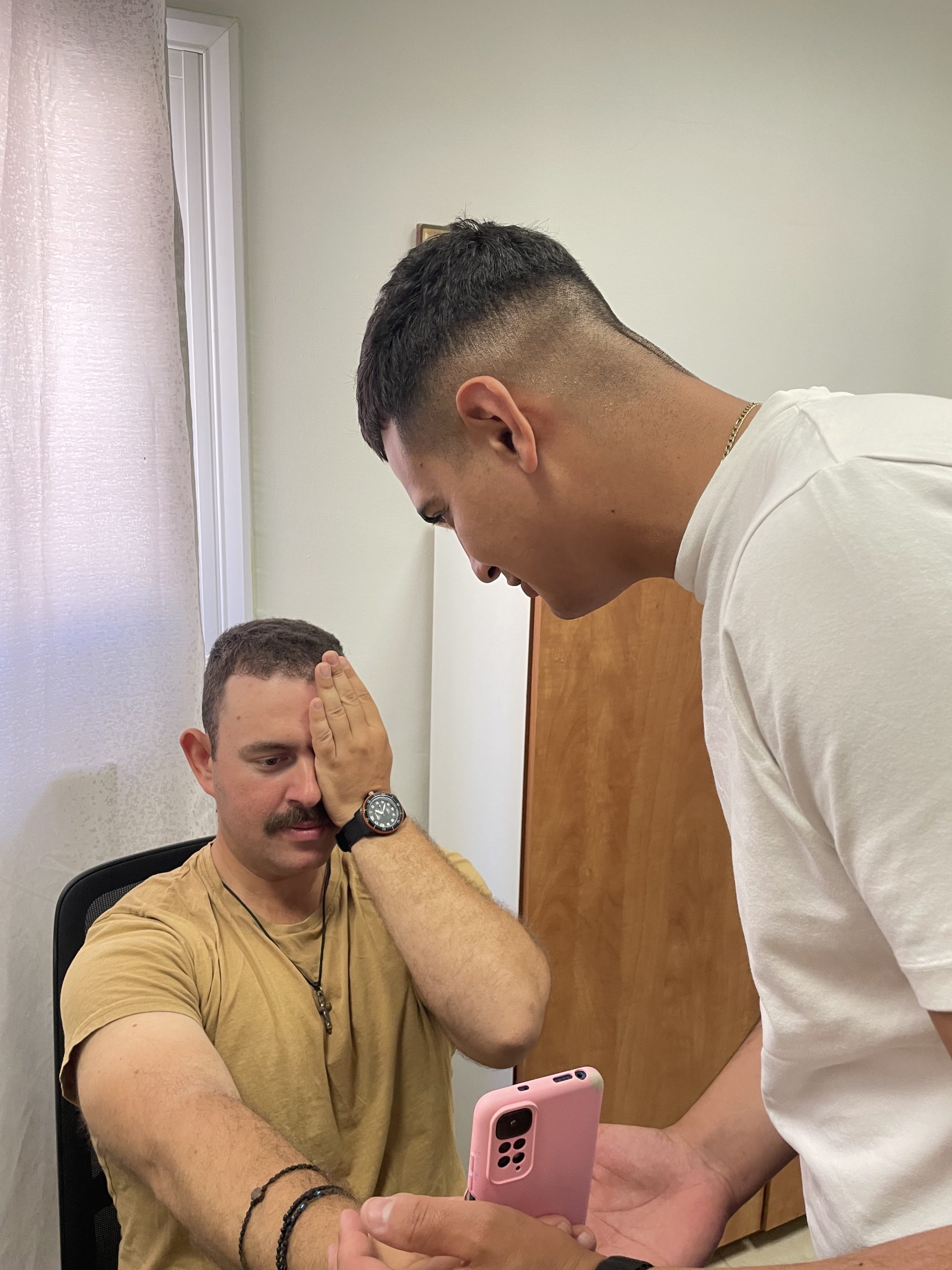
Photo: TeleKORI in a real session, with consent.
1 · The challenge
What the team needed to know
Can patients and clinicians use TeleKORI in routine outpatient and telemedicine care? And do they understand that it supports the doctor rather than replacing the examination?
2 · Who took part
20 adult patients and their clinicians, in two settings, in Greece
• 10 patients in an outpatient clinic, supported by a nurse or technician • 10 patients at home, before or during a telemedicine follow-up
3 · What we tested
Non-clinical real-world validation of usability, trust and workflow fit
Two real care scenarios, observed in place. We asked: is it easy to use, do patients feel comfortable and safe, does it fit outpatient and telemedicine routines, and do people understand its role as an AI-assisted decision-support tool?
4 · What we learned
Three findings
• Patients and clinicians found it smooth to use and saw it fitting both outpatient and telemedicine routines. • Most participants chose the statement “TeleKORI helps my doctor but does not replace a full medical examination.” They understood its role. • Clinicians said it supports monitoring without disrupting workflows or shifting medical responsibility.
5 · The decision
Adapt
The result is a step towards broader use, with insights feeding product refinement and regulatory preparation.
7 · For similar projects
Check whether users understand what your AI does and does not do. It is one of the strongest signs of trustworthy AI.