

For patients living with chronic conditions, the most critical moments in care often happen outside the hospital.
The transition from hospital-based care to home-based self-management remains one of the most challenging aspects of chronic disease management across Europe. This is the phase where significant risks may accumulate including gaps in continuity of care, difficulties in monitoring vital parameters, and fragmented communication between patients and doctors.
While digital health solutions can help bridge these gaps, an important question remains:
Do these tools truly fit into real healthcare workflows?
At the Good Tech Living Lab, this is precisely the type of question we seek to answer through structured validation activities conducted in real-world settings.
Recently, we had the opportunity to explore this challenge through the validation of Vida24.
What is Vida24?
Developed by VIDAVO , Vida24 is a CE-certified digital health platform designed to support remote patient monitoring, telemedicine, and coordinated care.
The platform facilitates a broader connected care ecosystem, including teleconsultations, personalised care plan management, appointment scheduling and access to laboratory results. Most importantly, it supports long-term disease management through structured digital workflows.
Rather than replacing clinical expertise, Vida24 aims to extend care beyond traditional healthcare settings, allowing clinicians to maintain visibility over patients’ health status between consultations.
From technology demonstration to real-life validation
As a member of the European Network of Living Labs (ENoLL), Good Tech Living Lab follows Living Lab methodologies that place end users at the centre of the innovation process, ensuring that solutions are validated in real-world settings rather than controlled laboratory environments.
Our role was not to evaluate the technical performance of the platform itself, but to generate user, workflow, and implementation insights that support post-market learning and future implementation efforts.
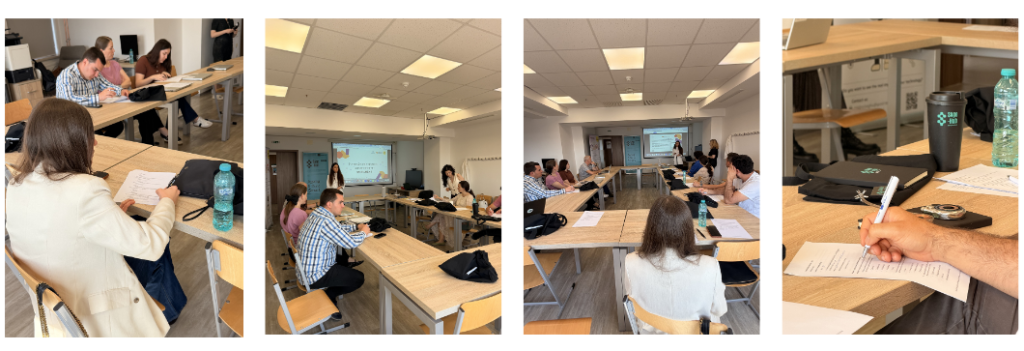
On May 27, 2026, at the MAVIS Innovation and Technology Transfer Center in Iași, we brought the technology face-to-face with Romanian healthcare practice context . The workshop gathered a multidisciplinary group of healthcare professionals with extensive experience in chronic disease management, including nephrologists, cardiologists, geriatricians, clinical psychologists, and healthcare management representatives from Romanian healthcare institutions and academic organisations.
What evidence did we extract from the live validation?
Following the introductory sessions and platform demonstration, the validation focused on two key areas.
The workshop centred on two disease-specific monitoring pathways implemented through Vida24.
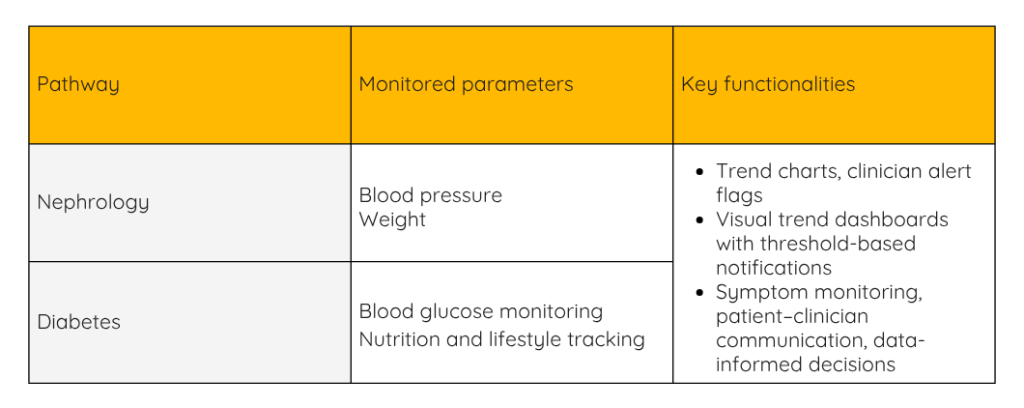
Participants evaluated the extent to which these workflows reflected current clinical practice in Romania, both as care processes and as digitally supported workflows. Particular attention was given to the patient onboarding process, the relevance of selected monitoring parameters, the proposed frequency of data collection, and the platform’s ability to support clinical consultations through functionalities such as trend visualisation, symptom monitoring, patient communication, and data-informed decision-making.
Beyond evaluating the platform itself, the discussions helped identify the organisational and clinical conditions necessary for successful implementation in routine care.
Translation and contextual adaptation- A prerequisite for adoption
Great technology often fails due to language and health-literacy barriers. While such adjustments may appear minor, they can significantly influence usability, comprehension, and patient adherence.
A term that is clinically accurate but unfamiliar to patients can reduce engagement. Conversely, language aligned with local clinical practice and health literacy levels can improve accessibility and trust.
This highlights an important lesson frequently observed in digital health innovation: successful adoption often depends as much on cultural and linguistic adaptation as on technological sophistication.
Why Living Lab validation matters beyond the product
The modern healthcare system increasingly needs digital solutions, but clinicians will not adopt tools that complicate their workflows, and patients will not use applications they do not understand. The in-situ validation we conducted in Iași – documenting pre-session expectations, perceived risks, benefits, and feasibility – bridges exactly this gap.
Vida24 proves that remote monitoring can support genuine continuity of care beyond hospital settings , provided it is properly adapted to the local context and the specific needs of both patients and medical professionals.
That, in our view, is what genuinely useful innovation looks like: technology that listens, adapts, and supports the human factor, because ultimately, the future of healthcare will not be shaped by innovative technologies alone.
If you work in the field of digital health or are simply interested in the future of connected healthcare, learn more at: https://vidavo.eu/?lang=en
#LivingLab #innovation #digitalhealth #connectedcare #remotemonitoring #GoodTech #VIDAVO #Vida24 #Evolve2Care #ENoLL