


Technology is not just about lines of code and circuits; more importantly, it is about how these intersect with people’s lives. Recently, we had the opportunity to take theory out of the lab and place it in front of the toughest—yet most constructive—critic: the real user.
Here is what we learned from Refleksa’s recent experience within the Good Tech Living Lab.
What is the Good Tech Living Lab, really?
If you follow ENoLL (European Network of Living Labs) publications, you already know that a Living Lab is an open, user-centered innovation ecosystem. At the Good Tech Living Lab, our mission is clear: we test technology in real-life conditions.
One essential aspect to keep in mind? We focus on social validation, not clinical validation. Our goal is not to issue diagnoses, but to understand how people interact with digital solutions, how they integrate them into their routines, and what impact these have on their everyday quality of life.
Refleksa: More than a mirror—a companion
The innovation that has recently captured our attention is Refleksa. The project addresses an acute social issue: loneliness among older adults. Refleksa is a smart mirror designed for seniors living alone, aiming to improve well-being through daily communication and voice-activated social support.
From the Lab to Digital Innovation Zone 4.0 Conference (Iași): Rigor and Results
Recently, we brought Refleksa into the “real world” at the Digital Innovation Zone 4.0 conference in Iași. Although the event atmosphere may seem informal, our presence was guided by a rigorous methodology and a well-structured working protocol.
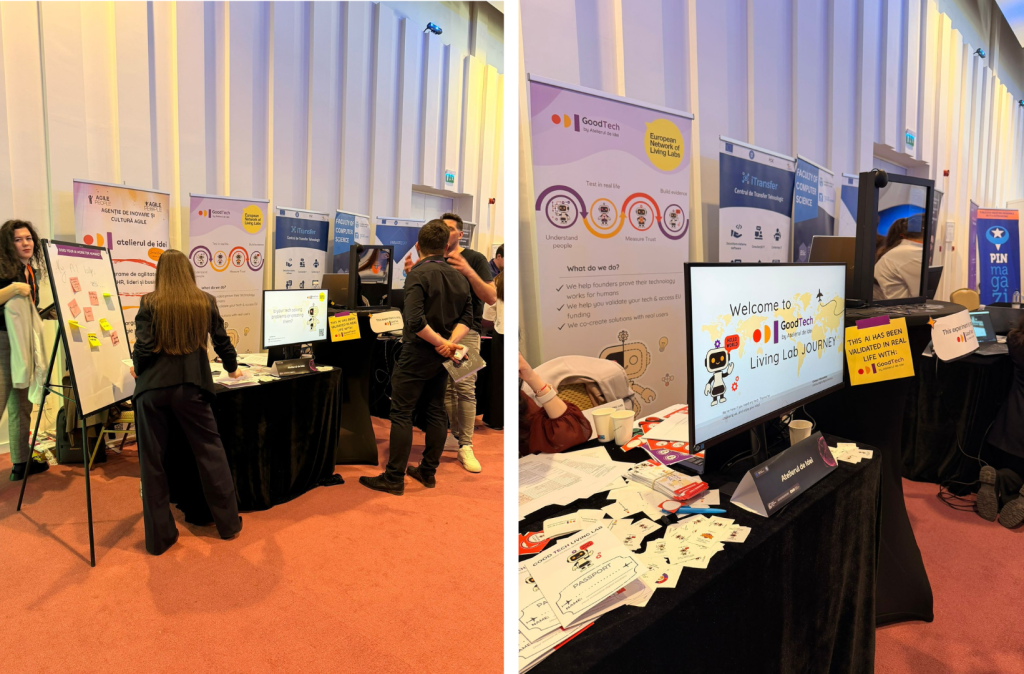
While the term “protocol” may sound rigid, it was essential for extracting valid data. We relied on Contextual Inquiry and Observational Study methods, monitoring specific indicators that go beyond simple verbal feedback.
How Refleksa was tested: three contexts, three perspectives on validation
To understand whether Refleksa could genuinely support meaningful human interaction, we deliberately exposed the concept to three different contexts. Each context served a different purpose: testing the interaction itself, challenging the concept through the perspective of future specialists, and finally examining its ethical and societal resilience in an international setting.
Direct interaction: testing Refleksa with real users
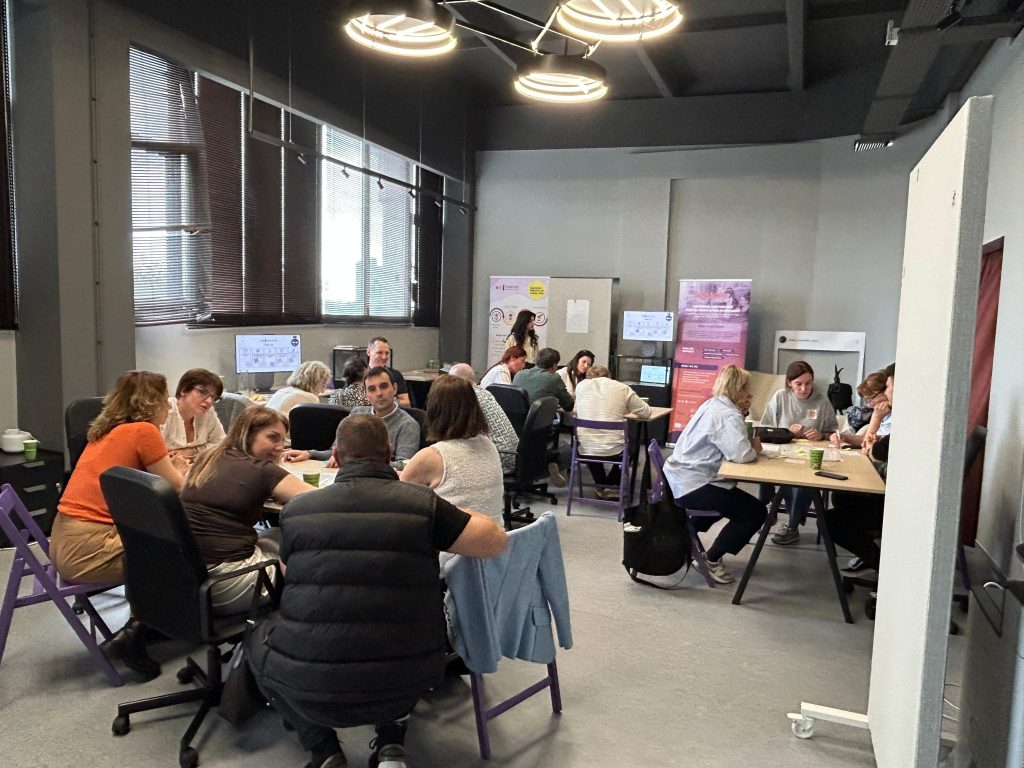
The first validation took place at the Digital Innovation Zone 4.0 Conference in 2026, where Refleksa was physically present and available for direct interaction with conference participants. Before every interaction, participants were clearly informed about the nature of the activity: what Refleksa is, what data would be collected during the session, and the fact that they could stop the interaction at any time, without any consequences.
Participation was entirely voluntary. After each session, participants completed a structured questionnaire covering several dimensions, including usability and clarity, emotional response and comfort, interaction safety and stability, intention to reuse, and trust. This allowed us to capture both observable aspects of the interaction and the participants’ subjective experience.
The purpose was not simply to ask, “Do you like it?” We wanted to understand what happens when people actually encounter Refleksa: whether the interaction feels intuitive, whether the technology creates a sense of comfort and trust, and what conditions influence their willingness to engage with it again.
From user to evaluator: the bioengineering student workshop
The second context moved away from direct product testing and into a structured case-study exercise with students in bioengineering, during the National Conference of Bioengineering for Students and Young Researchers in Iași.
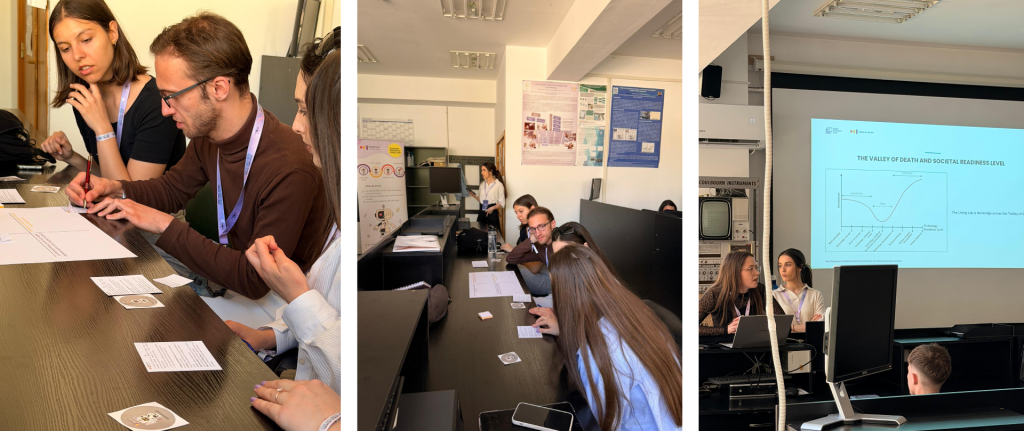
Here, Refleksa was no longer physically present. Instead, participants were invited to examine the project from different perspectives and to challenge its assumptions. Working in assigned roles—including user, innovator, public authority, ethical observer, and researcher—they analyzed the case and explored its potential strengths, limitations, and ethical vulnerabilities.
The exercise asked participants to make a collective decision: was Refleksa “ready to launch,” “ready with conditions,” or “not ready yet”?
This context helped us move beyond validating the product itself. It allowed us to test whether our evaluation framework could withstand scrutiny from different stakeholders and whether the questions we were asking about Refleksa were the right ones.
International perspective: testing ethical resilience
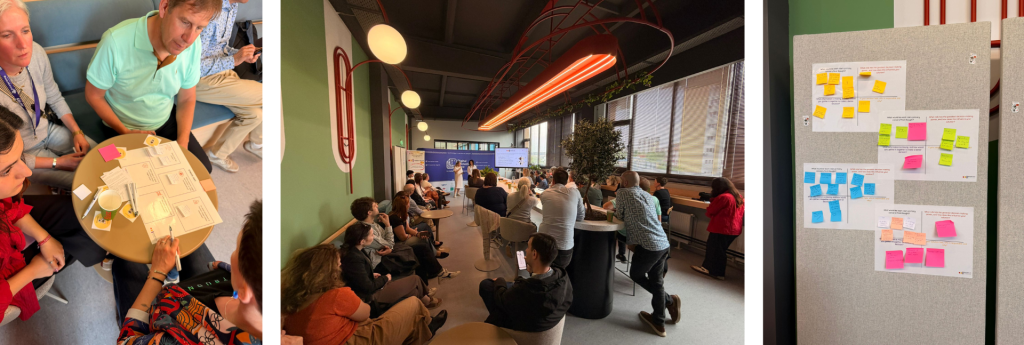
The third context brought an international perspective to the process. At the Enterprising for Tomorrow international conference, participants from 20 countries explored Refleksa as a case study, using different roles to examine its social, ethical, and practical implications. This broader perspective challenged us to look beyond the product itself and consider how an AI-powered social companion might function in private and emotionally sensitive spaces.
Across the three contexts, validation evolved from direct user interaction, to stakeholder evaluation, and finally to international ethical scrutiny—giving us a more complete understanding of both Refleksa and the framework used to assess it.
What “science” did we extract from the live experimentation process?
The testing highlighted several key insights: the relationship between AI response time and trust, the importance of tone of voice and clarity over semantic complexity for senior users, and the interaction triggers that encourage people to initiate conversations with an inanimate object. We also explored perceptions of privacy, finding that acceptance tends to increase when the social value of the technology—particularly its potential to reduce loneliness—is clearly understood.
While our tools included measurement grids and structured observation, the focus remained on what matters most: social validation and human experience. The data simply helped us make these experiences measurable.
The evaluation concluded with conditional approval, subject to seven concrete improvements before expanding Refleksa’s use, particularly among more vulnerable populations.
This is perhaps one of the most important lessons of the Living Lab approach: validation is not just about proving that an innovation works, but about understanding the conditions under which it can be used responsibly.
The benefits of experimenting in a Living Lab
Why do we choose this interactive, methodologically documented testing approach instead of staying confined to an office?
✔️ Validation in a real ecosystem: we reduce the gap between “what we thought users wanted” and their actual fundamental needs.
✔️ Evidence-based iteration: the protocol ensures that the changes we make in code are grounded in observed behavior, not assumptions.
✔️ Humanizing AI: we learn how to make artificial intelligence feel less “artificial” and more like an extension of human empathy.
✔️ Responsible innovation: by combining direct user interaction with ethical and stakeholder-based evaluation, we can identify risks and necessary safeguards before scaling a solution to more vulnerable groups.
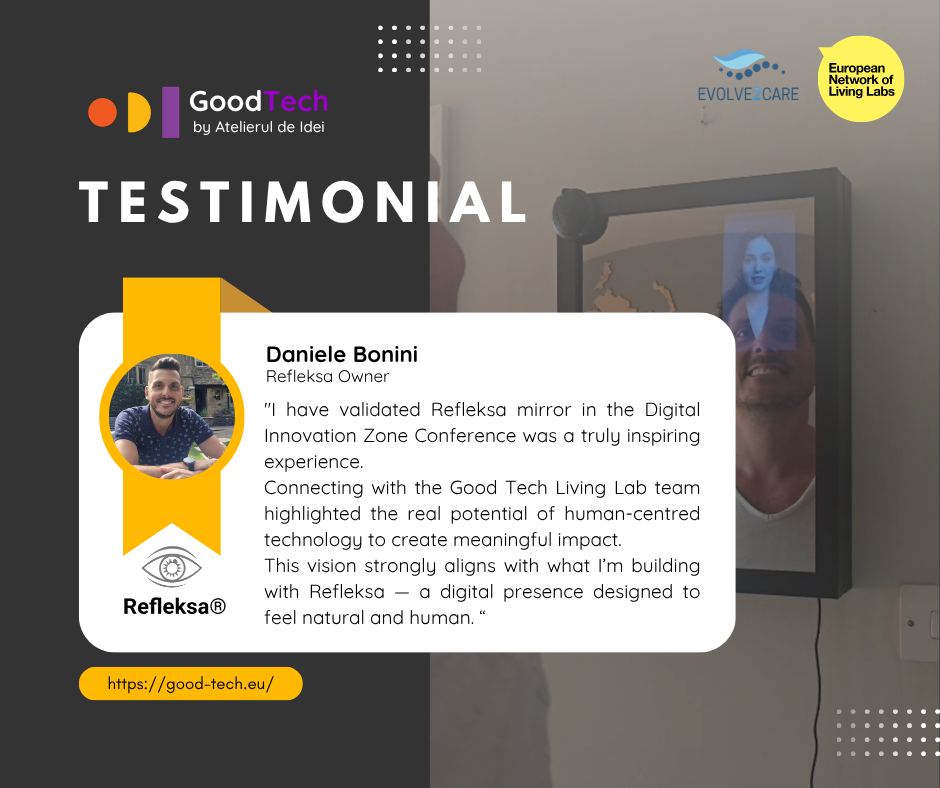
I’ve seen what users are saying, but what does innovator Daniele Bonini have to say about his experience at the Good Tech Living Lab?
Our conclusion?
The journey from an innovative idea to a life-changing product inevitably passes through dialogue and scientific rigor. Refleksa is not just about technology—it is about dignity and connection at any age.
What do you think?
Can a standardized process coexist with a warm, human-centered approach in AI development?
#GoodTechLivingLab #Refleksa #LivingLab #Innovation #DigitalInnovationZone #SocialValidation #AI #EthicsInAI #ENoLL